
The Future of Wireless Communication
Introduction: A New Era of Connectivity
The evolution of wireless communication has brought us to the brink of a new era, with 5G technology already transforming our digital landscape and 7G on the horizon promising even more revolutionary advancements. In this comprehensive article, we will explore the intricacies of 5G and 7G connectivity, their benefits, challenges, and the potential they hold for the future.
Understanding 5G Connectivity
What is 5G? 5G, or the fifth generation of cellular technology, is designed to increase speed, reduce latency, and improve the flexibility of wireless services. It represents a significant leap forward from its predecessor, 4G, offering theoretical peak speeds of up to 20 Gbps and significantly lower latency1. This technology is not just about faster internet; it is about enabling new experiences and applications that were previously impossible.
Key Features of 5G:
- Higher Speeds: 5G offers peak speeds of up to 20 Gbps, compared to 1 Gbps for 4G.
- Lower Latency: 5G reduces latency to as low as 1 millisecond, enabling near-instantaneous communication.
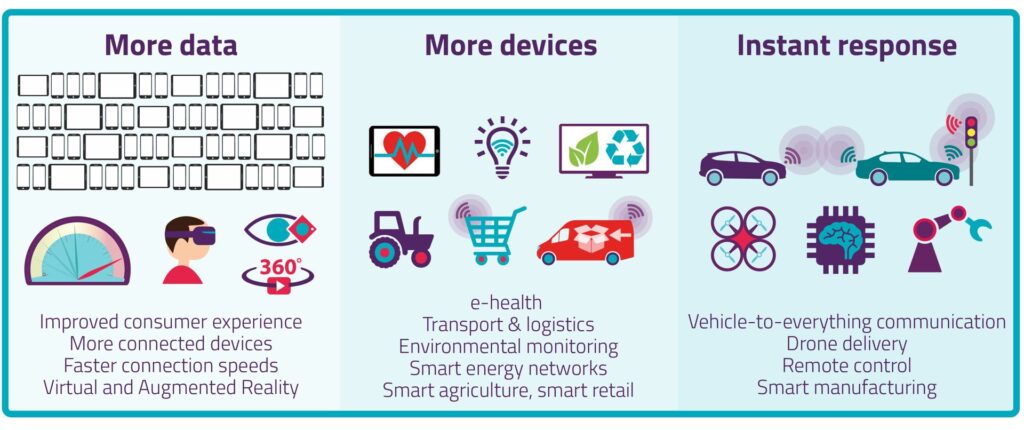
- Increased Capacity: 5G can connect more devices simultaneously, making it ideal for the Internet of Things (IoT) and smart cities.
- Enhanced Reliability: 5G networks are designed to be more reliable, with seamless connectivity between cellular and Wi-Fi networks.
Why It Matters: 5G technology is set to revolutionize various industries, from healthcare to transportation. It enables real-time data exchange, supports autonomous vehicles, and enhances remote surgery capabilities. The increased bandwidth and lower latency of 5G also make it suitable for applications such as augmented reality (AR), virtual reality (VR), and industrial automation2.
The Benefits of 5G Connectivity
Enhanced Mobile Broadband: 5G provides faster and more reliable mobile internet, enabling seamless streaming, gaming, and video conferencing. Users can enjoy high-definition content without buffering and experience smoother online interactions.
IoT and Smart Cities: The increased capacity of 5G allows for the connection of billions of IoT devices, facilitating the development of smart cities. These cities can leverage 5G to improve traffic management, energy efficiency, and public safety through real-time data analysis and automation.
Healthcare Innovations: 5G technology supports telemedicine and remote surgery by providing the necessary bandwidth and low latency for real-time communication. Doctors can perform surgeries remotely with precision, and patients can receive timely medical consultations from the comfort of their homes.
Autonomous Vehicles: 5G enables vehicle-to-everything (V2X) communication, allowing autonomous vehicles to interact with each other and with infrastructure. This communication enhances road safety, improves traffic flow, and enables advanced driver assistance systems (ADAS).
The Challenges of 5G Deployment
Infrastructure Investment: Deploying 5G networks requires significant investment in infrastructure, including the installation of new base stations and antennas. The high cost of infrastructure development can be a barrier to widespread adoption.
Spectrum Allocation: 5G operates on higher frequency bands, which require careful spectrum allocation to avoid interference and ensure optimal performance. Governments and regulatory bodies must work together to allocate spectrum efficiently.
Security Concerns: The increased connectivity and data exchange facilitated by 5G raise security concerns. Protecting 5G networks from cyber threats and ensuring data privacy are critical challenges that need to be addressed.
Energy Efficiency: The higher frequency bands used by 5G consume more energy, raising concerns about the environmental impact. Researchers are exploring ways to improve the energy efficiency of 5G networks to mitigate this issue.
The Future of Connectivity: 7G Technology
What is 7G? 7G represents the seventh generation of wireless network technology, building upon the innovations introduced by its predecessors. While 5G is currently being deployed globally and 6G is in its early conceptual stages, 7G aims to go even further, enabling unparalleled levels of speed, efficiency, and integration with advanced technologies like artificial intelligence (AI), quantum computing, and extended reality (XR)3.
Key Features of 7G:
- Terabit-Level Data Rates: 7G is expected to deliver speeds ranging from 1 Tbps to 10 Tbps, far surpassing the capabilities of 5G.
- Ultra-Low Latency: 7G aims to achieve latency as low as 1 microsecond, allowing for real-time communication and processing.
- High Bandwidth: The massive bandwidth of 7G will enable multiple simultaneous ultra-high-speed connections, supporting billions of devices without congestion.
- Quantum Communication: 7G may leverage quantum technologies to enable instantaneous data transfer through phenomena like quantum entanglement.
Why It Matters: 7G technology promises to revolutionize industries by enabling real-time holographic communication, interactive VR/AR streaming, and massive data transfers. It will support advanced applications such as AI training, space research, and global simulations, transforming the way we interact with technology and the world around us3.
The Potential Applications of 7G Connectivity
Real-Time Holographic Communication: 7G will enable real-time holographic communication, allowing people to interact with lifelike holograms of others, regardless of their physical location. This technology has the potential to revolutionize remote work, education, and social interactions.
Interactive VR/AR Streaming: With its high bandwidth and low latency, 7G will support seamless VR/AR streaming, providing immersive experiences without buffering or delays. This capability will enhance gaming, entertainment, and training applications.
Massive Data Transfers: 7G’s terabit-level data rates will facilitate massive data transfers, enabling entire data centers to sync in real time. This capability is crucial for advanced applications such as AI training, space research, and global simulations.
Instant Access to Cloud Resources: Users will experience instantaneous access to cloud-based apps and storage, enabling computationally intensive tasks directly from lightweight devices. This capability will enhance productivity and enable new forms of digital interaction.
Conclusion: Embracing the Future of Connectivity
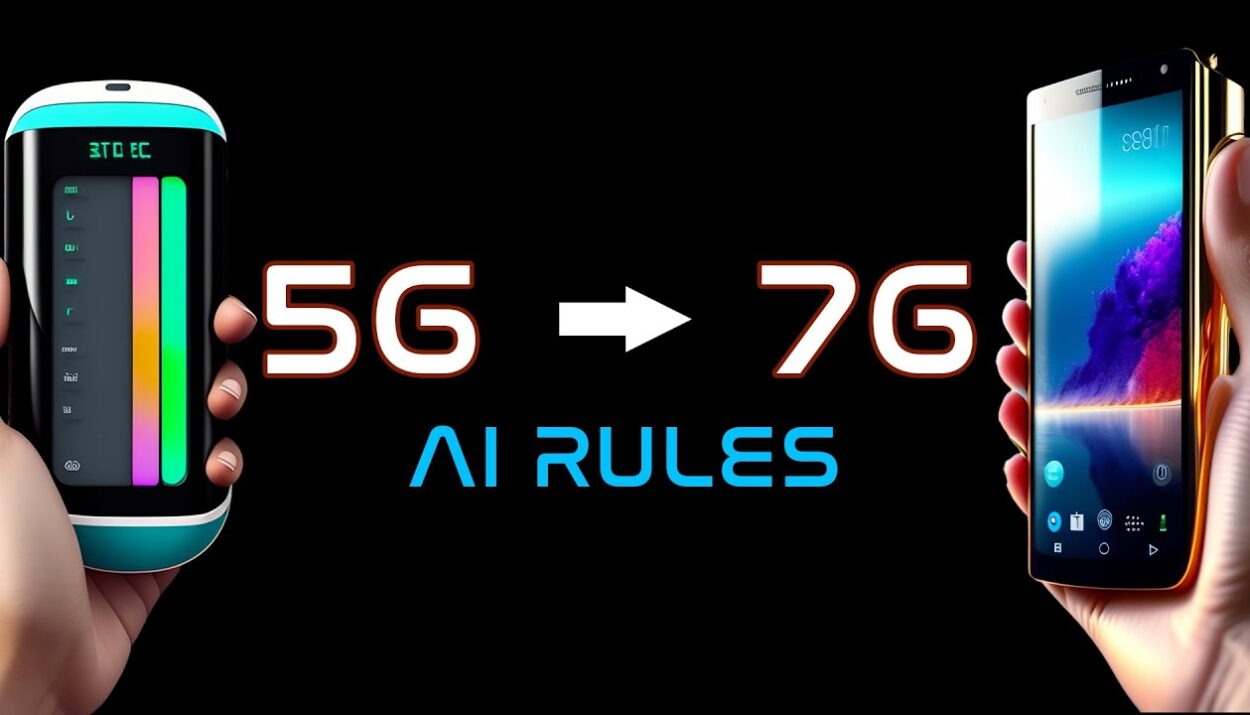
The evolution from 5G to 7G represents a transformative shift in wireless communication, promising faster speeds, lower latency, and unprecedented connectivity. As we embrace these advancements, we can look forward to a future where technology seamlessly integrates into our daily lives, enhancing our experiences and enabling new possibilities.
Engaging Question: How do you envision 5G and 7G connectivity transforming your daily life and the industries you interact with? Share your thoughts and experiences in the comments below!